
Join us!
April is Arab American Heritage Month, and we’re celebrating the richness of Arab cultures with a day full of free experiences for all ages! Join us for Arab Cultural Day on Saturday, April 18 from 12 pm – 5 pm for a vibrant gathering of music, storytelling, traditions, and flavors from across the Arab world.
Enjoy coffee and herbal tea stations and exhibits, explore the rhythms of tabla/derbakeh, and join a variety of workshops and presentations! Experience Egyptian folkloric shadow puppetry, discover the history of the Arabic language, and bring the kids for hands-on art workshops.
Come experience the beauty, diversity, and traditions of Arab cultures with us!
These presentations and workshops are free and open to the public!

Join us for a unique exploration of one of the earliest forms of Arab theater. In this engaging lecture, Dr. Nabil Bahjat takes us on a journey through the history and evolution of shadow puppetry—from its origins to its continued relevance today.
Discover how this art form has helped shape Arab cultural consciousness, offering insight into how communities have understood art, life, and humanity, while expressing enduring ideas of beauty and creativity.
Following the lecture, participants are invited to take part in a hands-on shadow puppetry workshop, bringing these traditions to life through practice and play.

Board member and Alif parent Lara Karam Dempsey is always a favorite with both kids and their grown-ups! Through lively storytelling, Arabic songs, dancing, and hands-on crafts, she creates a joyful, engaging experience that brings language and culture to life.
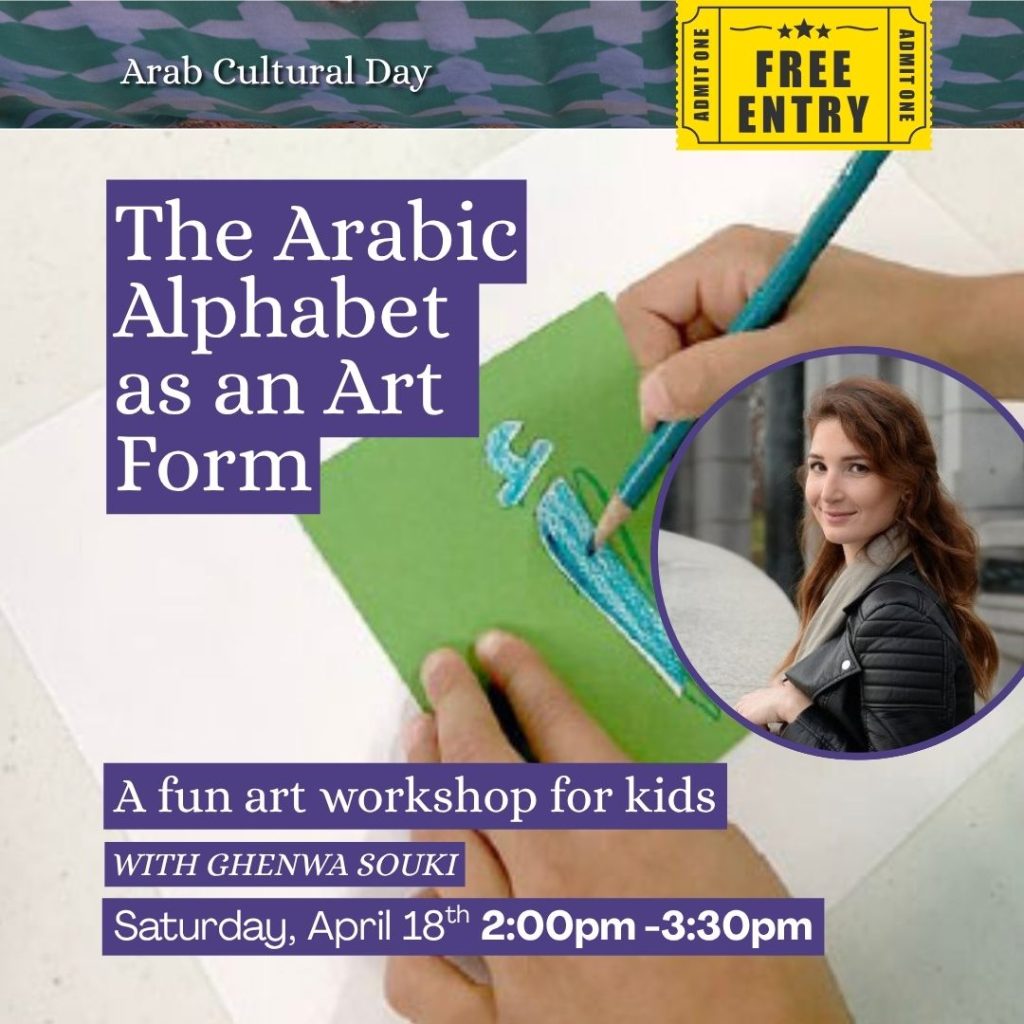
Discover the beauty of the Arabic alphabet through creativity and play. In this engaging, hands-on workshop, students will explore letterforms as both language and art, building familiarity with shapes, sounds, and structure in a fun and interactive way.
Through guided activities, participants will strengthen writing skills, reinforce letter and number recognition, and develop a deeper connection to the language while expressing themselves creatively.
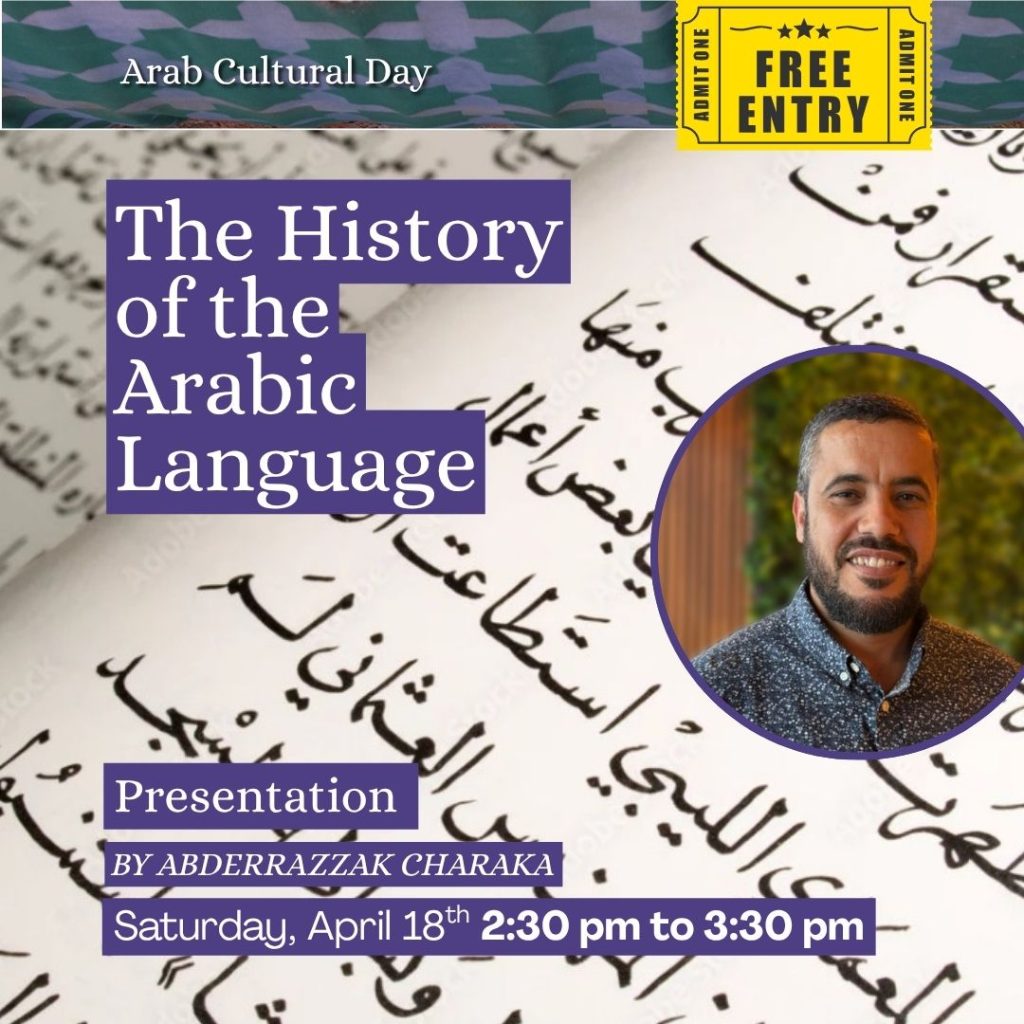
This lecture traces the remarkable journey of Arabic from its ancient Semitic roots to its status as one of the world’s most spoken and culturally significant languages.
Spanning over 3,500 years of linguistic history, the presentation is structured around five major themes: the pre-Islamic origins of Arabic and its earliest inscriptions; the transformative role of the Quran in standardizing and elevating the language in the 7th century CE; the extraordinary spread of Arabic across civilizations through the Islamic conquests and the golden age of translation; the rich diversity of regional dialects and the phenomenon of diglossia; and the emergence of Modern Standard Arabic through the 19th-century Arab Renaissance (Nahda).
The lecture also examines Arabic’s enduring global legacy — from the hundreds of loanwords it contributed to European languages in the fields of mathematics, astronomy, and medicine, to its contemporary role as an official language of the United Nations and a living cultural force for over 400 million native speakers.